Riding the train from Tel Aviv to Jerusalem I sat across from a 22 year old Lietenant in the Israeli army. He was very nice and we had an interesting discussion about how fast kids in Israel have to grow up because of the mandatory military service beginning at age 18. I thought about this fact at the Tel Aviv train station as I watched tons of kids that looked like they were still in high school carrying around automatic weapons. The train sped through farmland outside Tel Aviv and soon began to wind up the hills in the Jerusalem heights. The climb up to Jerusalem was gorgeous and the hills were filled with olive orchards. A number of the orchards had been cut down, one of the many ways of punishing Palestinians for bad behavior.
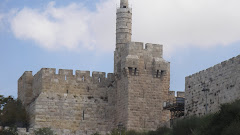
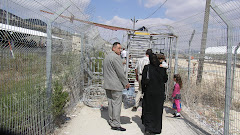
I caught a taxi at the end of the line outside of Jerusalem and rode to the Damascus gate in the Muslim quarter with a fellow named Lulu. The Damascus gate is one of seven entrances to the old city (I've heard different numbers but Lulu assured me he was correct). His driving made me think he had a death wish. I immediately put my seatbelt on and cluthched the o shit handle until the end of the ride. Twenty shekels later I was outside the towering walls of the Old City. I asked some arabs drinking turkish coffee how to get to the bus station and they directed me down a narrow alley. I found the bus to Ramallah, put my bag in the back and took my seat. I started a conversation with a little girl in broken arabic and soon remembered that talking to a girls who I'm not related to is haram (forbidden). The bus wound through the hills outside Jerusalem towards the unofficial Palestinian capital Ramallah. We drove along the seperation barrier for a few miles and eventually went through a number of military checkpoints. Snipers in towers pointed their weapons at every passing car, a very eerie feeling. Eventually we arrived at an underground bus station next to a crowded marketplace. The first guy I asked for directions had mental issues, but some nice old men saw the problem and pointed me to the Huwarra checkpoint bus. You cannot drive or take a bus all the way to Nablus, you have to get off at the checkpoint, walk through, and take another bus. As I was sitting down I dropped a shekel (about 30 cents) and it rolled to the back of the bus. Distracted and a bit nervous I didn't go to retrieve it. A couple minutes later a little girl tapped me on the shoulder and handed it back. The small gesture broke my heart. Here is a girl whose parents were probably either unemployed or living in poverty, partly because of policies supported by my country, and she retrieved and returned my shekel. I cannot begin to articulate how kind and generous Palestininas have been to me, even after finding out I'm from America.
It was not difficult to cross the Huwarra checkpoint into Nablus but there were hundreds of people waiting to get out, most of them get refused, even with all the proper permits and paperwork. I rode in a shared taxi to the Funduq al Yasmeen (yasmeen hotel) in downtown Nablus. As I got out a kid ran down the stairs. He went to grab my bag and I explained that I just needed to make a phone call. He replied in broken english, “I know, we called Hasan, he's on his way to get you.” We walked up through a maze of stone hallways filled with ancient looking columns. The place looked and felt sort of like an mc escher drawing.
Hasan soon arrived and we drove to the volunteer flat and Porject Hope office. I signed some papers and met most of the other volunteers. Our flat is like an international commune. Volunteers came from france, holland, iceland, belgium, california, scotland, and norway. The flat is located midway up the hills overlooking Nablus. Atop the adjacent hills sits an Israeli patriot missle base and another large military base. At night you can watch military vehicals winding down the switchbacks to conduct raids. With the infrared feature activated on video camras you can see which houses have been “painted” that night for invasion. Nablus has a sort of ancient warning system. When the army comes down for raids all the dogs start barking, which wakes up the roosters. Within minutes the entire town is enveloped in a symphony of barking, cuckooing, and small arms fire. Sleeping the last couple nights has been tough with the rabid misquitos, sirens, and occasional bursts of automatic gunfire. The call to prayer just began, hearing it echo through the Nablusi valley is incredibly majestic.
The first night here we were invited to the wedding of one of our coordinators. Needless to say, they do things a little differently. I'll have to tell you about that experience at some point.